In this guide
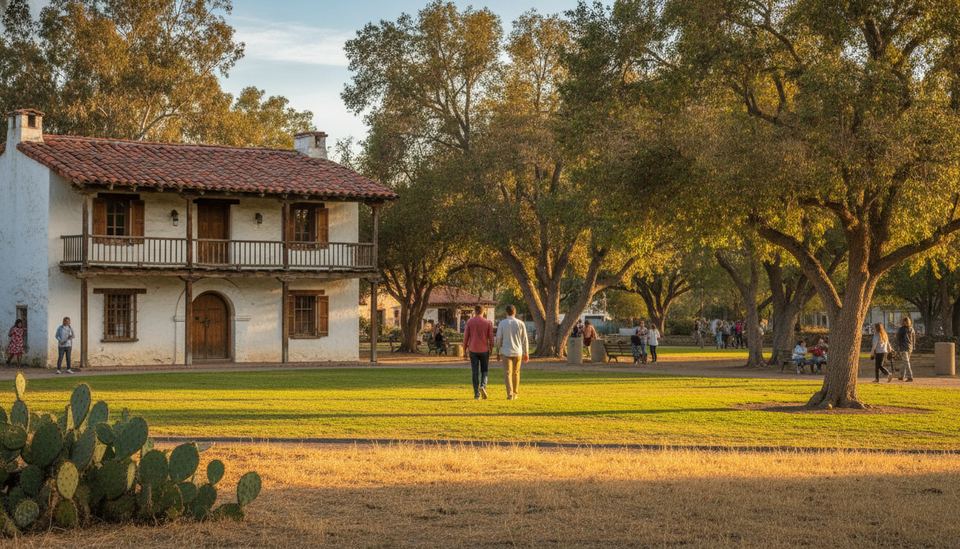
Old Town San Diego is the neighborhood at the foot of Presidio Hill where the city began. Its heart is Old Town San Diego State Historic Park, a few blocks of restored and rebuilt adobes, wooden houses, shops and small museums set around a grassy plaza. Walking the grounds costs nothing, most of the museums are free, and the trolley stops right at its edge.
Plan on two to three hours for the plaza and a handful of museums. Start at the visitor center, see the Casa de Estudillo, then see if you have energy left for the Whaley House or a walk uphill to Presidio Park. For more ideas around the county, see our Things to Do section.
Why Old Town matters: a short history
San Diego's European history starts on the hill above Old Town. In 1769 a Spanish expedition led by Gaspar de Portolá set up a military post there, the Presidio of San Diego. That July, Junípero Serra founded Mission San Diego de Alcalá on the same hill. Together they were the first permanent European settlement in what is now California. The mission moved inland a few years later.
The Kumeyaay people had lived in this region long before any of that, and their villages and trails shaped where the Spanish chose to settle.
From presidio to town
By the 1820s, under Mexican rule, a small civilian town had grown up around a plaza at the foot of the hill. Settlers preferred the flat, easier-to-reach land, and the presidio was largely abandoned by the 1830s. That town is the Old Town you visit today.
The state park interprets the town from roughly 1821 to 1872, covering the Mexican period and the early American years after California became a state. In April 1872 a fire burned through part of the business district, and the city's center of gravity had already shifted toward "New Town," the area that became downtown along the bay.
Becoming a state park
Old Town was never completely abandoned, but many of its buildings fell into disrepair. California created Old Town San Diego State Historic Park in 1968 to protect what remained. Some buildings are original adobes. Others are careful reconstructions built on their historic footprints, so read the signs to know which is which.
What to see in the state historic park
Most of the park's sights cluster around the plaza, called the Plaza de las Armas. You can walk the whole thing in fifteen minutes without stopping, but you'll want to go in and out of buildings.
Robinson-Rose House (visitor center)
Start here. The Robinson-Rose House on the plaza is the park's visitor center, according to California State Parks. The original building dates to 1853. What stands now is a 1989 reconstruction. Inside is a scale model of Old Town as it looked in 1872, which makes the rest of the park easier to picture. Staff can tell you which museums are open that day and whether any free walking tours are running.
Casa de Estudillo
Across the plaza is the Casa de Estudillo, a large adobe built around a central courtyard and garden. Its rooms are furnished to show how a wealthy Californio family lived. It's the building most people remember, and it gives the best sense of how thick adobe walls keep rooms cool.
Seeley Stable and the smaller museums
The Seeley Stable holds wagons, stagecoaches and related exhibits about how people and mail moved through the region. Around the plaza you'll also find a one-room schoolhouse, a newspaper office, a blacksmith and other small sites. Not all of them open every day, so check at the visitor center first.
Shops and restaurants
Many buildings in and around the park house shops selling crafts, candy, pottery and souvenirs, and Mexican restaurants line San Diego Avenue just outside. They're part of the experience for many visitors. Hours and offerings change, so treat any list you find online as a starting point.
Beyond the park: Whaley House and Presidio Park
Two nearby sites round out a visit if you have time and energy.
The Whaley House
A short walk east on San Diego Avenue, the Whaley House is a brick Greek Revival home completed in 1857. Over the years it served as a family home, a general store, a theater and the county courthouse. It is operated by the Save Our Heritage Organisation (SOHO) and charges its own admission, separate from the state park. It's also famous for ghost stories, which brings big crowds in October. Hours vary by season, so check SOHO's listing for the house before you go.
Presidio Park
Presidio Park is the City of San Diego park on the hill above Old Town, where the 1769 presidio and mission stood. Civic leader George Marston bought the hill in 1907 to protect it, and no original structures survive there today. What you get is shade, lawns, walking paths and views over Mission Valley. The walk up is steep in places. Bring water.
Getting there
Old Town is one of the easiest places in San Diego to reach by transit, which is good news because parking on busy weekends can be tight.
By trolley, train or bus
The Old Town Transit Center sits on the park's northwest edge. It is served by the Blue and Green trolley lines, the COASTER commuter train, Amtrak's Pacific Surfliner and several MTS bus routes. The Blue Line has stopped there since the Mid-Coast extension opened in November 2021, according to San Diego MTS. Our San Diego Trolley guide covers fares and transfers.
By car
Old Town sits next to Interstate 5 and Interstate 8. The park itself is pedestrian-only. There are free and paid lots around the edges of the park and some street parking, but they fill on weekends and during festivals. Arriving before late morning helps. If you're combining Old Town with another stop, consider parking once and using the trolley for the other leg.
| Getting there | Best for | Keep in mind |
|---|---|---|
| Trolley (Blue or Green line) | Day trips from downtown, Little Italy, Mission Valley | Station is a short walk from the plaza |
| COASTER or Pacific Surfliner | Visitors coming from North County | Check schedules, weekend service is thinner |
| Car | Families with gear, combining several stops | Lots fill on weekends and event days |
| Walking up from the plaza | Reaching Presidio Park | Steep in sections, little shade on the climb |
Tips for a better visit
When to go
Weekday mornings are the calmest. Weekends bring more people, more street performers and more open shops, which some visitors prefer. The park hosts holiday and cultural events through the year, including Day of the Dead observances in early November and Christmas season activities. Event dates change annually, so check State Parks or Old Town merchant listings for the current calendar.
With kids
The plaza lawn gives kids room to run. The blacksmith shop, stagecoaches in the Seeley Stable and the 1872 model in the visitor center usually hold their attention. Strollers manage fine on most paths, though some historic floors and thresholds are uneven.
Comfortable walking
Old Town is flat in the park and hilly beyond it. Wear shoes that handle packed dirt and old brick. There's shade under the plaza trees, but much of the area is open, so a hat and water help on warm afternoons.
Pairing Old Town with other stops
Old Town fits well into a half-day. From the transit center, the Green Line runs toward downtown, so you could add a walk through Little Italy and its piazzas on the way. If you'd rather keep the history theme, Balboa Park has several museums about the region. And if you're building a waterfront day, the USS Midway Museum is on the Embarcadero, a short ride away.
Old Town rewards slow walking more than a checklist. Pick three buildings, read the signs, sit in the plaza for a while, and you'll leave with a clearer picture of how San Diego grew from a hilltop fort into a city.
Quick quiz
Old Town in five questions
A quick check on what you just read. Wrong answers point you back to the right section.
In what year were the Spanish presidio and Mission San Diego de Alcalá founded on Presidio Hill?
- 1542
- 1769
- 1872
It's covered in the section Why Old Town matters: a short history
Both date to 1769: Portolá's presidio in spring and Serra's mission that July.Which building is the state park's visitor center?
- The Whaley House
- The Seeley Stable
- The Robinson-Rose House
It's covered in the section Robinson-Rose House (visitor center)
The Robinson-Rose House on the plaza is the visitor center and holds a model of Old Town in 1872.Which period does the state historic park interpret?
- Roughly 1821 to 1872
- The 1950s and 1960s
- The Spanish era only
It's covered in the section From presidio to town
The park covers the Mexican period and early American years, up to 1872.Who operates the Whaley House?
- California State Parks
- Save Our Heritage Organisation (SOHO)
- San Diego MTS
It's covered in the section The Whaley House
SOHO runs the Whaley House, which charges its own admission separate from the state park.Which rail services stop at the Old Town Transit Center?
- Only the Green Line trolley
- Blue and Green trolley lines, the COASTER and the Pacific Surfliner
- No trains, only buses
It's covered in the section By trolley, train or bus
The transit center is served by two trolley lines, the COASTER, Amtrak's Pacific Surfliner and MTS buses.
Next up: Continue down the Green Line: what to know before you visit Little Italy.
Questions readers ask
Is Old Town San Diego free to visit?
Walking the grounds of Old Town San Diego State Historic Park is free, and most of its small museums are free too. Some sites nearby, such as the Whaley House, charge their own admission.
How much time do you need in Old Town San Diego?
Two to three hours covers the plaza, the visitor center and a few museums at an easy pace. Add time for a meal or a walk up to Presidio Park.
How do you get to Old Town San Diego without a car?
Take the trolley (Blue or Green line), the COASTER or an Amtrak Pacific Surfliner train to the Old Town Transit Center, which sits at the edge of the park.
Why is Old Town called the birthplace of California?
A Spanish presidio and Mission San Diego de Alcalá were founded on Presidio Hill, just above Old Town, in 1769, the first permanent European settlement in what is now California.