In this guide
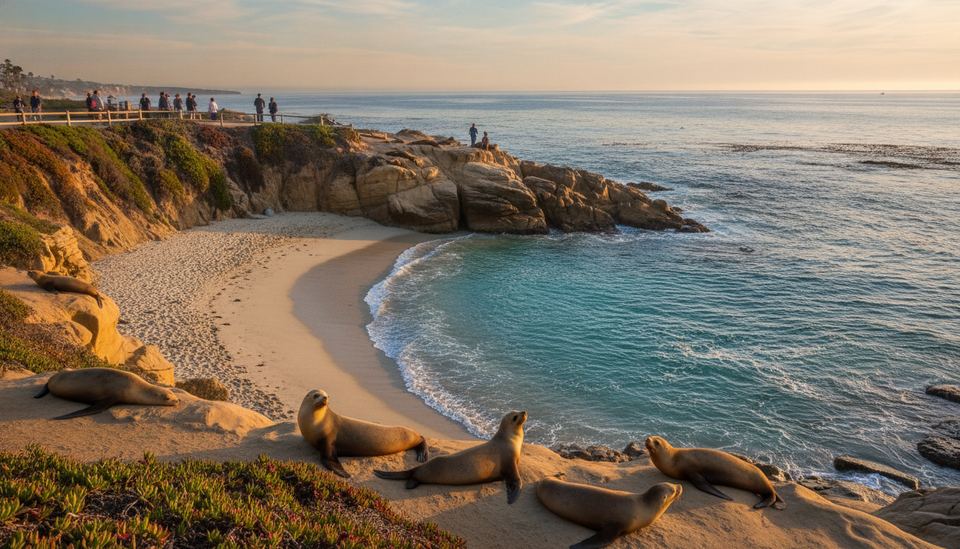
La Jolla Cove is a small, sandy beach tucked under the bluffs of La Jolla Village, with some of the clearest water in San Diego County and a sea lion colony that lounges on the rocks a few steps away. Go for an early morning swim or snorkel, then watch the sea lions from behind the barriers on the path above. That's the short answer.
The longer answer is about rules. Part of the shoreline next to the Cove is closed year-round, the water is a protected reserve, and federal law covers how close you can get to the animals. None of it is complicated, but people get it wrong every day. Here's what applies, who sets it and how to plan a good visit around it.
What La Jolla Cove actually is
The Cove itself is a pocket beach. At high tide the sand shrinks to a narrow strip, and on summer weekends it fills up early. Stairs lead down from Ellen Browning Scripps Park, the grassy park along the top of the bluff, which is where most people spread out a blanket and eat lunch.
The water is the reason to come. The Cove sits on the edge of an underwater area that has been protected for decades, and the rocky reef close to shore holds bright orange garibaldi, kelp and plenty of other fish that don't spook easily because nobody is allowed to catch them.
If you are still choosing between coastal spots, our guide to San Diego beaches compares the Cove with wider, easier beaches. For more ideas along the coast, browse the Beaches & Outdoors section.
Where to see the sea lions (and where you can't go)
California sea lions haul out on the rocks and ledges west of the Cove, around an area called Point La Jolla. Harbor seals, a different species, gather a short walk south at Children's Pool. Both are easy to see from the sidewalk. Both are protected.
Point La Jolla and Boomer Beach closure
On September 18, 2023, the San Diego City Council voted 8-0 to amend the municipal code and close Point La Jolla and part of Boomer Beach year-round. Before that, the area had been closed seasonally, from May 1 to October 31, after an emergency closure in 2021. The California Coastal Commission approved the permit for the year-round closure.
The closed zone runs roughly 150 yards, from a commemorative plaque northwest of the Cove to the last gazebo above Boomer Beach. The Cove's swimming area, Shell Beach and Ellen Browning Scripps Park are not part of it. You can still watch the sea lions from behind the barriers, and the city kept an ocean access point inside the closed area for swimmers and bodysurfers. The city has said the closure stays in place until it adopts a long-term management plan, so check posted signs each visit.
Children's Pool and the harbor seals
Children's Pool is the small beach behind a curved seawall just south of the Cove. The City of San Diego closes that beach every year during harbor seal pupping season, December 15 to May 15. During the closure you can watch the seals and their pups from the sidewalk and the seawall railing above the sand.
How close is too close
Seals and sea lions are protected by the federal Marine Mammal Protection Act. NOAA Fisheries asks people to stay at least 50 yards (about 45 meters) from seals and sea lions on land or in the water, and that includes pets. Its West Coast "Share the Shore" guidance goes further and encourages 100 yards. NOAA also states plainly that taking close-up selfies with seals or sea lions is illegal.
At the Cove, the barriers and the bluff path already keep you far enough away in most spots. The trouble starts on the low rocks near the water, where sea lions often rest a few feet from the path people use to reach the beach.
Signs that you are too close are easy to read. A sea lion lifts its head, barks at you, shuffles away or slides into the water. Back off before that happens. If you see someone harassing an animal, you can report it to the NOAA Fisheries enforcement hotline at (800) 853-1964.
Snorkeling and swimming at the Cove
On a calm day, the Cove is one of the friendliest places in the county to put your face in the water. The reef starts close to shore, the fish are used to people, and the beach is protected from much of the swell.
When to go
Mornings are usually calmer, before afternoon wind picks up. Flat days with small surf make the biggest difference. Check the National Weather Service San Diego surf forecast and the NOAA tide predictions before you leave home. Low tide exposes more rock and can make the entry trickier, while a moderate tide often gives you an easier sandy walk-in.
Water clarity changes from week to week. After rain, runoff can cloud the water and raise bacteria levels, so look for any county water quality advisories posted on the beach. Spring and early summer can also bring the marine layer, which keeps mornings gray and the water cool. A wetsuit makes a long snorkel much more comfortable most of the year.
Safety basics
The Cove is open ocean, not a pool. City of San Diego Lifeguards staff it, and they are the best source on the day's conditions. Swim with a buddy, stay inside the area lifeguards point to, and get out if the surge starts pushing you toward the rocks. Strong swimmers head out toward the buoys; beginners should stay close to the beach and the reef edge. If you rent fins and a mask nearby, ask the shop about that morning's visibility and currents.
The marine reserve rules
The water off La Jolla Cove and La Jolla Shores falls within a network of protected areas. The California Department of Fish and Wildlife manages Matlahuayl State Marine Reserve, about 1.04 square miles (2.7 square kilometers), next to San Diego-Scripps Coastal State Marine Conservation Area. In a state marine reserve, taking any living marine resource is prohibited.
In plain terms: look, don't take. That covers fish, lobster, shells with animals in them, sea stars, kelp and anything alive on the rocks. The garibaldi, California's state marine fish, gets extra protection under state fishing regulations, so leave the orange ones alone even outside the reserve. Spearfishing and line fishing are off limits inside the reserve boundaries.
| Area | What it is | Main rule to know |
|---|---|---|
| La Jolla Cove beach | Small sandy beach, lifeguard-staffed | Open for swimming and snorkeling; follow lifeguard flags |
| Ellen Browning Scripps Park | Grassy bluff-top park above the Cove | Open; good place to watch sea lions from a distance |
| Point La Jolla and part of Boomer Beach | Sea lion haul-out area | Closed year-round under city ordinance; view from behind barriers |
| Children's Pool | Beach used by harbor seals | Closed December 15 to May 15; view from the sidewalk |
| Water off the Cove and La Jolla Shores | State marine reserve and conservation area | No taking of living marine resources (CDFW) |
Parking, timing and the smell
Parking is the hardest part of a Cove trip. Street spaces in La Jolla Village fill early on weekends and in summer, and the closest spots along Coast Boulevard turn over slowly. Arriving early solves most of it. The MTS trip planner can show you bus options into La Jolla Village if you'd rather skip the car, and you can combine the Cove with other coastal stops, like the Torrey Pines hike a few miles north.
You will probably notice a smell. Sea lions and the seabirds that roost on the cliffs leave a lot behind, and on warm, still days it hangs over the bluff. It is stronger near the rocks and fades once you are down on the sand or out in the water.
A responsible visit, start to finish
Here is how a good Cove morning tends to go. Park early. Walk the bluff path and watch the sea lions from behind the railing or barriers. Check the posted signs. Head down to the beach, talk to a lifeguard, and get in the water while it's calm. Snorkel the reef close to shore, then dry off on the grass in Scripps Park.
Most of the rules exist because the animals are right there and visitors are many. Keep your distance, leave the marine life where it is, and respect closure signs even when the area looks empty. That's all the Cove asks of you.
True or false?
La Jolla Cove rules: true or false?
The whole La Jolla Cove area, including the swimming beach, is closed year-round for the sea lions.
It's covered in the section Point La Jolla and Boomer Beach closure
The year-round closure covers Point La Jolla and part of Boomer Beach. The Cove's swimming area, Shell Beach and Ellen Browning Scripps Park are not included.NOAA Fisheries asks people to stay at least 50 yards from seals and sea lions, pets included.
It's covered in the section How close is too close
That is NOAA's general viewing distance, and its West Coast Share the Shore guidance encourages 100 yards.Children's Pool beach closes every year from December 15 to May 15.
It's covered in the section Children's Pool and the harbor seals
The City of San Diego closes the beach during harbor seal pupping season. You can still watch from the sidewalk.You can keep a few shells with live animals inside if you snorkel inside the reserve.
It's covered in the section The marine reserve rules
In a state marine reserve, CDFW prohibits taking any living marine resource. Look, don't take.Afternoons are usually the calmest time to snorkel at the Cove.
It's covered in the section When to go
Mornings are usually calmer, before the afternoon wind picks up. Check the surf forecast and tides first.
Next up: Planning a full San Diego day? See how to get the most out of Balboa Park.
Questions readers ask
Can you swim at La Jolla Cove?
Yes. The Cove's swimming area is open and staffed by lifeguards, but conditions change fast, so check the surf forecast and talk to the lifeguards before you get in.
Why is Point La Jolla closed?
The San Diego City Council voted in September 2023 to close Point La Jolla and part of Boomer Beach year-round so people stop crowding and harassing the sea lions that rest and raise pups there.
How close can you get to the sea lions?
NOAA Fisheries recommends at least 50 yards, and its West Coast Share the Shore guidance encourages 100 yards. Getting close for a selfie can count as harassment under federal law.
Can you fish or collect shells at La Jolla Cove?
No live animals or plants. The water off the Cove lies in a state marine protected area where the California Department of Fish and Wildlife prohibits taking living marine resources.
Is La Jolla Cove good for beginners who want to snorkel?
On calm, flat days the Cove is one of the easier places in the county to start, but it is open ocean. Bring a buddy, stay near shore and skip it when lifeguards post warnings.