In this guide
The best San Diego beach is the one that fits what you plan to do that day. Want calm water for kids? La Jolla Shores is the usual pick. Want a boardwalk, crowds and people-watching? Mission Beach and Pacific Beach. Bringing the dog? Ocean Beach. Want a lot of flat, open sand? Coronado.
Before any of that, two quick checks save a wasted drive: the County's water-quality status and the beach rules for the city you're heading to. Rules change at city lines, and water conditions change after every rain. The rest of this guide walks through both, beach by beach.
Start with the kind of day you want
Most beach days fall into a few types. A family day needs gentle surf, restrooms and a lifeguard close by. A social day wants food, a boardwalk and some noise. A dog day needs a leash-free zone. A long walk or a run wants firm, wide sand. A quiet afternoon means going a little farther north or picking a weekday morning.
Be honest about which day you're having. A lot of frustration at the beach comes from taking toddlers to a surf break or taking a book to a summer Saturday on the Mission Beach boardwalk.
A quick comparison of the main beaches
| Beach | Area | Good for | Worth knowing |
|---|---|---|---|
| La Jolla Shores | La Jolla | Families, beginner swimmers, kayak launches | Year-round city lifeguard station; parking fills early |
| Mission Beach | Mission Bay area | Boardwalk, crowds, bay and ocean in one trip | Year-round city lifeguard station; busy in summer |
| Pacific Beach | North of Mission Beach | Social scene, surfing, the boardwalk | Two year-round city stations listed (Pacific Beach and North Pacific Beach) |
| Ocean Beach | Point Loma peninsula | Local feel, pier, Dog Beach | Dog Beach is one of two city leash-free areas |
| Coronado | Across the bay | Wide flat sand, long walks | Separate city, separate rules |
| Torrey Pines State Beach | North of La Jolla | Bluffs, quieter stretches | Run by California State Parks, not the city |
Calm water and families: La Jolla Shores
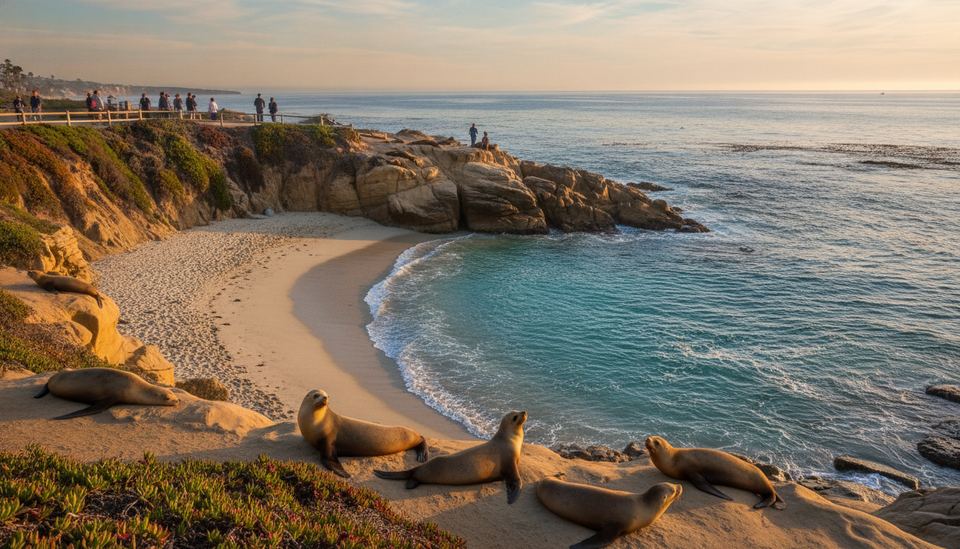
La Jolla Shores is a long, gently sloping beach with a grassy park behind it. The surf there is usually softer than at the more exposed breaks, which is why you see so many kids and first-time kayakers. The City of San Diego lists La Jolla Shores among its permanent lifeguard stations staffed year-round. Arrive early on weekends if you want to park anywhere near the sand.
Boardwalk energy: Mission Beach and Pacific Beach
These two run together along the same strip of sand, with the boardwalk connecting them. You get bikes, skaters, food stands and a steady crowd most of the year. Mission Beach also sits next to Mission Bay, so you can switch to calmer bay water on the same outing. Expect noise and full parking on summer weekends. If that's the point of your day, it works well.
Local feel and dogs: Ocean Beach
Ocean Beach has a pier, a walkable main street and a crowd that skews local. At its north end, where the San Diego River channel meets the ocean, is Dog Beach. The City of San Diego names it as one of two designated leash-free areas for dogs; the other is Fiesta Island in Mission Bay. Dogs are restricted at other city beaches, so check posted signs before letting yours run.
Wide, flat sand: Coronado
Coronado's main beach is broad and flat, good for walking, running and spreading out. It belongs to the City of Coronado, not San Diego, so its rules, lifeguards and fire policy are its own. Its location near the border also makes water quality the first thing to check, for reasons covered below.
Quieter options farther north
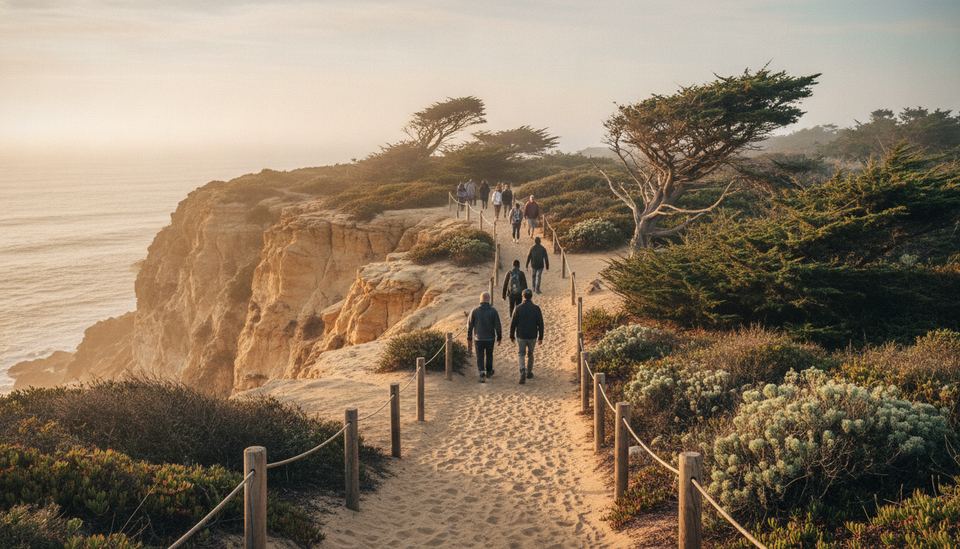
Torrey Pines State Beach, below the bluffs north of La Jolla, is managed by California State Parks. North County cities such as Del Mar, Encinitas and Oceanside run their own beaches with their own lifeguards and rules. These can feel calmer than the central beaches on a weekday, though not on a hot holiday weekend. More trips and trails are collected in our Beaches & Outdoors section.
Rules that apply on City of San Diego beaches
The rules below come from the City of San Diego and apply to its beaches. Coronado, Imperial Beach, the North County cities and state beaches set their own.
- Alcohol and glass: The city's lifeguard service states that alcoholic beverages and glass containers are not allowed on the beach, cliffs, walkways, park areas or adjacent parking lots. A city news release also lists smoking as not allowed on city beaches and around Mission Bay.
- Fires: Under the city's Parks and Recreation fire ring rules (revised July 2026), beach fires are allowed only in city-provided fire rings or in a portable propane-fueled device. Only charcoal, clean wood or paper can go in a ring, no pallets or trash. No beach fires between midnight and 5 a.m., and rings are first come, first served.
- Dogs: Leash-free only at Dog Beach and Fiesta Island. Elsewhere, follow the posted rules for that stretch.
Rules can be revised, so read the signs at the entrance. They're posted for a reason, and they're the version that counts on the day you're there.
Check water quality before you swim
The County of San Diego runs a beach and bay water-quality program and posts the current status of each beach at sdbeachinfo.com. There are two levels. An advisory means bacteria samples came back above standard levels, so swimming is discouraged. A closure is stricter and means you should stay out of the water entirely.
The county has said most of its beach water-quality problems come from surface runoff and discharges. That's why rain matters so much here: storm drains carry street runoff straight to the shore. After at least 0.2 inch of rain, the county's Department of Environmental Health and Quality issues a general rain advisory and asks people to stay out of ocean and bay water for 72 hours after the rain ends. No signs go up for that general advisory, so you won't see a warning at the beach.
The South Bay has a separate, longer-running problem. Cross-border sewage flows from the Tijuana River have kept parts of the shoreline near the border closed for long stretches, and in 2026 the county extended closures north along the Coronado shoreline more than once. Advisories and closures stay in place until testing meets state standards, so a beach closed last week may be open today, and the reverse. Check on the morning you go.
Lifeguards and rip currents
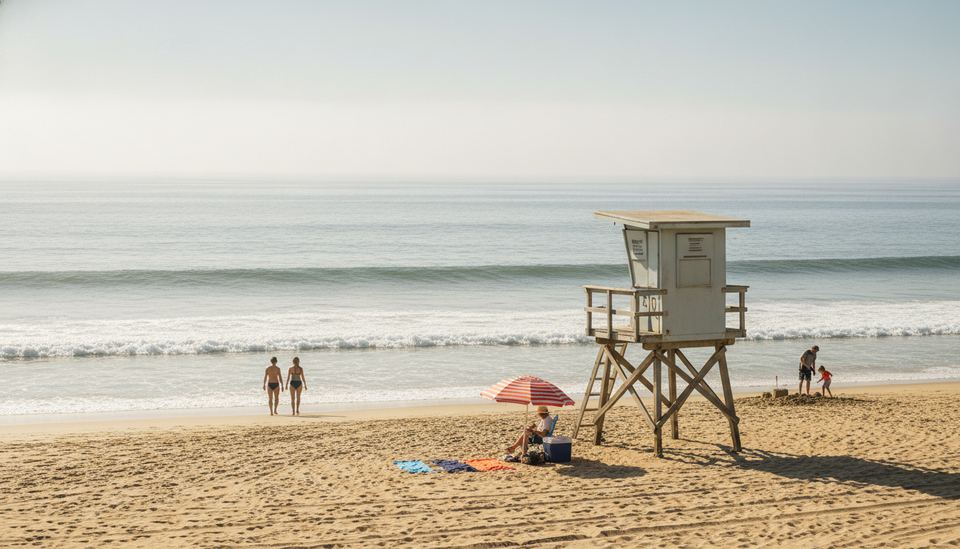
San Diego's lifeguards are a division of San Diego Fire-Rescue. According to the city's lifeguard overview, permanent stations staffed year-round cover Ocean Beach, South Mission Beach, Mission Beach, North Pacific Beach, Pacific Beach, Children's Pool, La Jolla Cove and La Jolla Shores. In summer, seasonal towers add coverage along the rest of the shoreline. Swimming within sight of a staffed tower is the simplest safety choice you can make.
Rip currents are the main ocean hazard on these beaches. They're narrow channels of water moving away from shore, and they can carry even strong swimmers out. The National Weather Service advice is short. Don't fight the current. Stay calm and float to save energy. Swim parallel to the shore until you're out of the pull, then angle back toward the beach. If you can't, face the shore and call and wave for help.
Ask the lifeguard on duty about conditions before you go in. They watch that water all day and know where the rips are forming.
Parking, timing and comfort
Parking is the real limit at the central beaches. Lots near La Jolla Shores, Mission Beach and Pacific Beach fill early on summer and holiday weekends. Arriving in the morning or taking a bus or a bike solves most of it.
Timing matters for comfort too. Late spring and early summer mornings along the coast are often gray and cool, while inland areas are already warm. A layer and a towel you don't mind sitting on in the wind are worth packing even on a day that looks hot from home. Sunscreen still matters under clouds.
Most beaches have restrooms and outdoor showers near the main access points, but not along every stretch. If you're with small kids, set up within a short walk of both.
If you're new to the area and trying to figure out where people actually live near the coast, our Neighborhoods section covers the communities behind these beaches. The full list of guides is on the all articles page, and you can read about who writes them on Marisol Keane's author page.
Quick quiz
Beach day check: rules and safety
Five quick questions drawn from this guide.
On City of San Diego beaches, what does the city say about alcohol?
- Allowed in cans, not in glass
- Not allowed on the beach, cliffs, walkways, park areas or adjacent lots
- Allowed after 5 p.m.
It's covered in the section Rules that apply on City of San Diego beaches
The city's lifeguard service lists alcoholic beverages and glass containers as banned on the beach and the areas around it.Where can you have a beach fire on a City of San Diego beach?
- Anywhere above the high-tide line
- Only in a city fire ring or a portable propane device
- Only with a permit from lifeguards
It's covered in the section Rules that apply on City of San Diego beaches
The city's fire ring rules allow fires only in city-provided rings or portable propane devices, and none between midnight and 5 a.m.After at least 0.2 inch of rain, how long does the county ask people to stay out of ocean and bay water?
- 12 hours
- 72 hours after the rain ends
- Two weeks
It's covered in the section Check water quality before you swim
The county's general rain advisory asks swimmers to stay out for 72 hours after rainfall ends, and no signs are posted for it.Caught in a rip current, what does the National Weather Service advise?
- Swim hard straight back to shore
- Stay calm, float, then swim parallel to shore
- Dive under and swim along the bottom
It's covered in the section Lifeguards and rip currents
Fighting the current wears you out. Float, swim parallel to the beach until you're free, then angle back in.Which two places are the City of San Diego's designated leash-free areas for dogs?
- Dog Beach in Ocean Beach and Fiesta Island
- La Jolla Shores and Pacific Beach
- Mission Beach and La Jolla Cove
It's covered in the section Local feel and dogs: Ocean Beach
The city names Dog Beach, at the end of the San Diego River channel, and Fiesta Island in Mission Bay.
Next up: Heading inland after the beach? Read our North Park neighborhood guide.
Questions readers ask
Is alcohol allowed on San Diego beaches?
Not on City of San Diego beaches. The city's lifeguard service lists alcoholic beverages and glass containers as banned on the beach, cliffs, walkways, park areas and adjacent parking lots. Other cities and state beaches set their own rules.
Can I have a bonfire on a San Diego beach?
On City of San Diego beaches, only in a city-provided fire ring or a portable propane device, and not between midnight and 5 a.m., according to the city's Parks and Recreation fire ring rules. Rings are first come, first served.
How do I know if the water is safe to swim in?
Check the County of San Diego beach and bay water-quality status at sdbeachinfo.com before you go. Advisories and closures stay in place until testing meets state standards, and rain often triggers new ones.
Which San Diego beaches allow dogs off leash?
Within the City of San Diego, the two designated leash-free areas are Dog Beach at the end of the San Diego River channel in Ocean Beach and Fiesta Island in Mission Bay.
What should I do if I get caught in a rip current?
The National Weather Service says not to fight it: stay calm, float, swim parallel to the shore until you are out of the pull, then angle back in. If you can't, face the shore and wave and call for help.